Nuclear is an anagram of unclear. And ‘unclear’ is just one word to describe Australia’s position when it comes to harnessing the power of the atom. Better words might be ‘confusing’, ‘contradictory’ and ‘bizarre’.
For a start we possess a staggering 40pc of the worlds known reserves of uranium plus a well-established mining and export industry. But in 1998, given Australia’s abundance of cheap coal-fired electricity, the Howard Government agreed to ban nuclear power plants. Although it was mere political horse-trading in a tight parliament, it left Australia, as the world’s third biggest exporter of uranium, almost completely devoid of nuclear technology.
Today Howard does not take any pride in that legacy and he is now an advocate for nuclear power. But that would take another Act of Parliament.
Howard is not alone. Now that Old King Coal is losing his throne the Morrison government has asked the House of Representatives Standing Committee on Environment and Energy to look at nuclear power again.
Whatever your position on climate change, what has certainly changed since the nineties is the climate of opinion. A growing number of climate scientists including the IPCC (the Intergovernmental Panel on Climate Change) are now thinking the dangers of going nuclear are outweighed by the dangers of not going nuclear.
But the question the government needs to resolve is price. On the surface nuclear power looks expensive as well as quite possibly dangerous were something to go wrong.
But in its favour the nuclear option would provide reliable 24-hour emissions-free power.
Proponents argue the vast ancient and stable landmass of Australia has remote locations to accommodate reactors and waste disposal. It need not be in anyone’s backyard.
Then there are the jobs that come with mining and nuclear power generation plus the development of technical proficiencies in a country that cannot even make cars or outboard motors.
Yes, we have heard all these arguments before.
I am advocating nothing more than that you might familiarize yourselves with the debate because we are going to have it again. When the big end of town, including finance, insurance, mining and construction companies say we need to get off coal then you can be sure nuclear power will be somewhere in the mix.
Such a decision should be informed by science. It can hardly be a moral issue as it was back in the Cold War. Ethics can hardly be of consideration in a nation that considers nuclear power unsafe but exports 10,000 tonnes of uranium to a world that can’t get enough of it.
Right now, we are like the Big Tobacco bosses who in my experience don’t smoke for health reasons but think it’s fine for you to do so.
Speaking of cigarettes, every year they kill 20,000 people in Australia alone. The nuclear industry likes to report that since its inception, globally 5,000 people have died in nuclear power related accidents. They claim millions more have died from pollution related death as a result of burning fossil fuels.
If those arguments are even halfway sound, there remains one awkward question. In fact it’s a megatonnage of elephants in the room: nuclear weapons.
The capacity to generate nuclear power leads to the ability to produce weapons grade plutonium. Consequently China, France, Russia, Britain, America, India, North Korea, and Pakistan have produced their own nukes. Belgium, Germany, Italy, Holland and Turkey share the weapons through membership of NATO.
Then there is a shadow world of nuke-ownership. The ‘could be’ nations of Belarus, Ukraine, and Kazakhstan.
You could only hope not.
The most interesting case is Israel. That nation is very tight-lipped about its widely presumed nuclear capacity. It takes advantage of what is known as nuclear ambiguity. The deterrence factor (have they or have they not?) protects them from their many enemies without the stigma of being a nuclear armed bully.
It doesn’t always work. When Sadam threatened that he would “rain fire and scorpions” on the heads of his enemies the western allies found justification for invading Iraq. But they discovered no weapons of mass destruction. Only fire and scorpions. It was just a flamboyant manner of speaking.
We don’t know for sure what is the real nuclear weapon delivery capacity of the crazy ‘hermit Kingdom’ of North Korea. But clearly no one is eager to poke the dragon. Not even Trump.
Which raises the question of what would our perceived enemies make of a nuclear-powered Australia? In the new cold war of uneasy diplomacy, names are not always mentioned. So, let’s just call them ‘those whom we hope to deter with $225 b-b-billion dollars-worth of old-fashioned diesel-powered French submarines’.
What would our presumed enemies think about our nukes after they stopped laughing about our subs?
In these alarming times there is no need for further alarm. Whether or not we eventually go nuclear I am sure an Aussie bomb will remain forever an old Holden.
I know you don’t even want to imagine ScoMo or Albo, or whoever comes later, with their finger on the nuclear button.
But it wouldn’t have to be that way. We could save a fortune on defence and go for nuclear ambiguity alone.
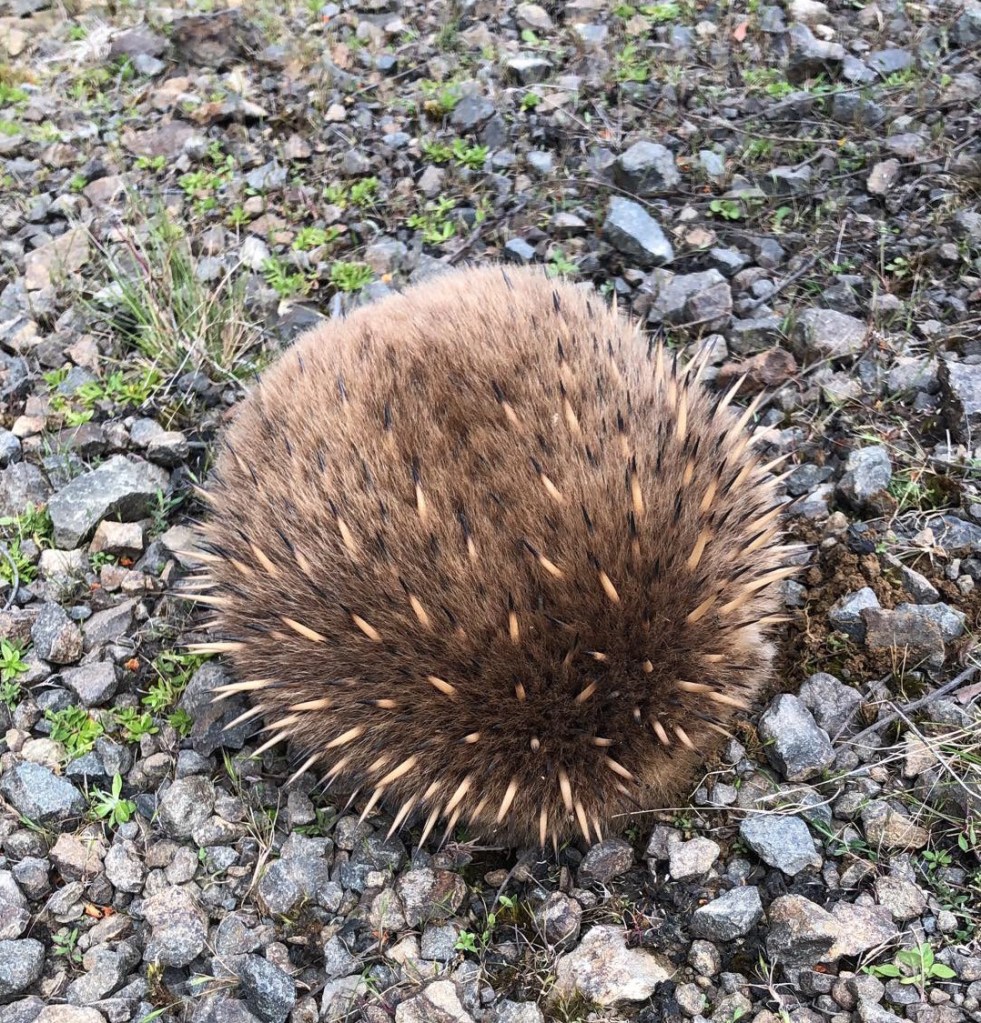
No atomic bomb, just the possibility that we are not as harmless as we look. We might even deliberately leak the term, “Project Echidna”.
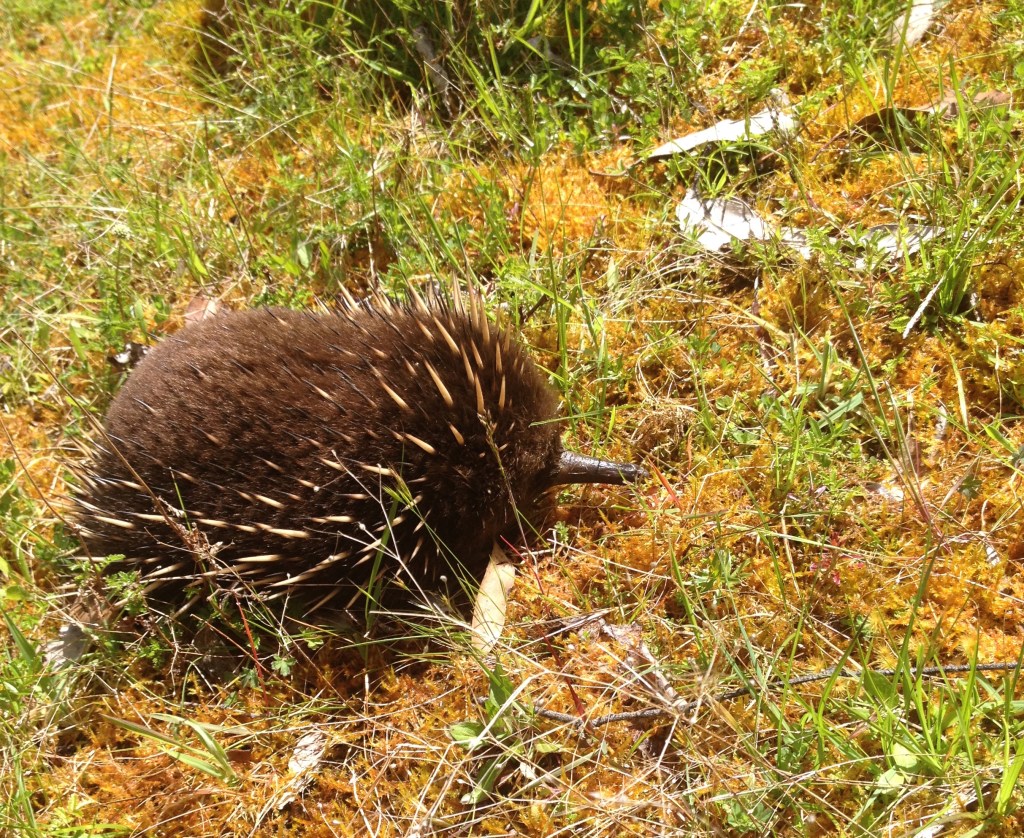
A harmless amiable marsupial; a danger to ants but would never attack people.
But don’t try to grab hold of it.
 charles-wooley.com